

Review a stretch of calls
Start a review from the + menu in the composer: under Routines, choose Review conversations. Wren asks for:
Every review builds on past reviews, so it doesn’t re-report what you’ve already seen.
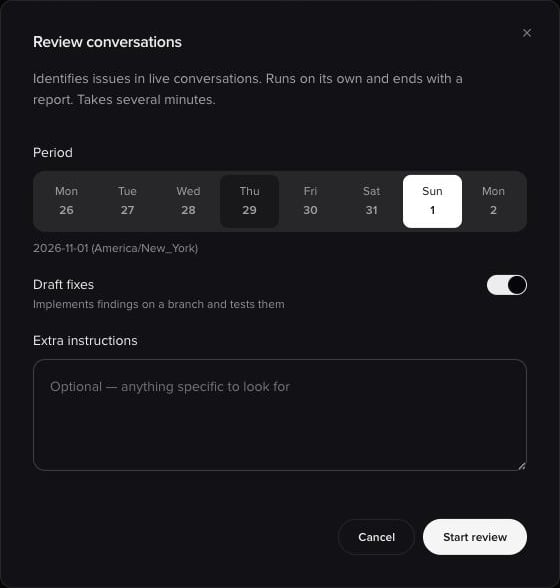
Setting up a review before it runs
Reviews always run hands-off, regardless of whether you’re in Interactive or Auto mode. That’s why the options above are set up front.
What a review produces
Wren works through your project area by area (the caller journey, the knowledge base, and everything else), and for each candidate problem it checks itself before reporting: it verifies the issue is real, and sizes how often it actually happens across the period. Each finding comes with:- What’s wrong, and which part of the project it sits in
- A type: a defect, a knowledge gap, or an opportunity
- A severity: high, medium, or low
- Evidence: how many of the sampled calls were affected, with example conversations you can click straight into
Starting a review by hand is rolling out gradually. If you don’t see Review conversations in the + menu, ask your PolyAI contact whether it’s enabled for your account.
Continuous review
Running a review by hand is one way in. Wren also reviews your calls on a schedule, so problems find you instead of the other way around. What it finds surfaces on the Wren home screen, under Insights.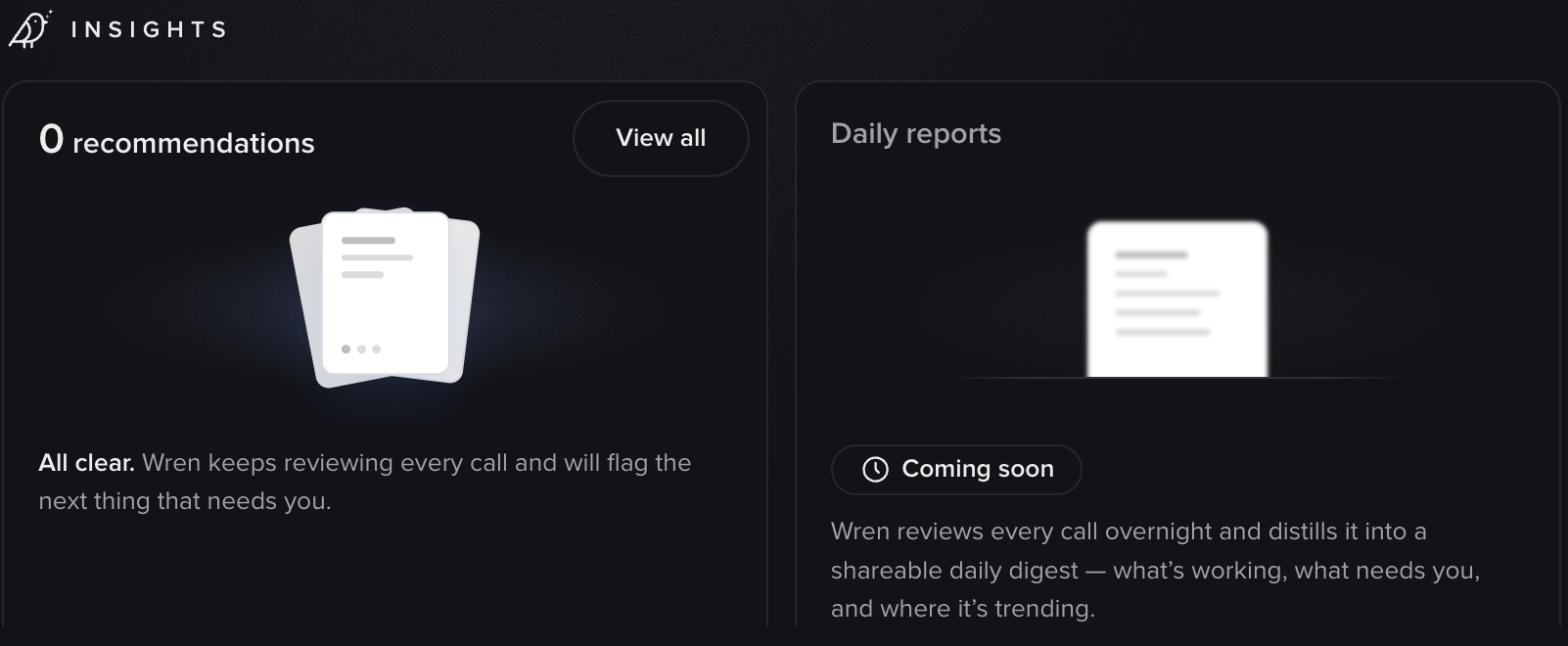
The Insights zone on the Wren home screen
Scheduled reviews
New projects you create in Dialog Studio, including duplicated and imported ones, get a nightly review automatically. It runs at a set time between midnight and 6 AM in your region’s time zone, and covers the previous full day of calls on Live. A night is skipped when the project had fewer than 30 Live conversations in the previous 24 hours, so quiet and test projects don’t fill up with noise. To change or turn off a project’s schedule, contact your PolyAI representative.Recommendations
Rather than a report you read once, findings become a standing list on your project: an inbox of things that need your attention, each one persisting until it’s resolved or dismissed. Open findings are summarized by what they need from you and how much impact they have.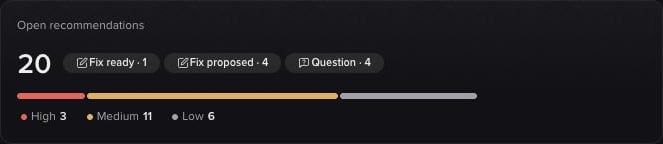
Open findings, grouped by what they need from you and their impact
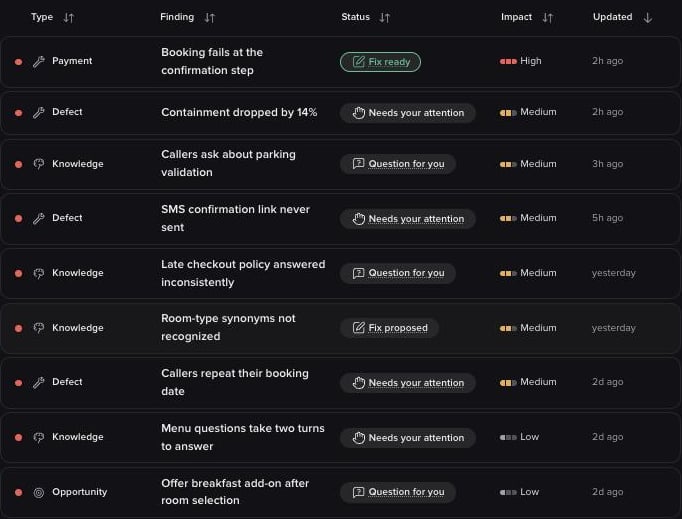
The findings list
- What happens: the problem, and which part of the project it relates to
- How often: how many conversations were affected, with example conversations you can open
- Why it happens: the cause, where Wren traced it
- Latest updates: what Wren and your team have done on the finding since it was opened
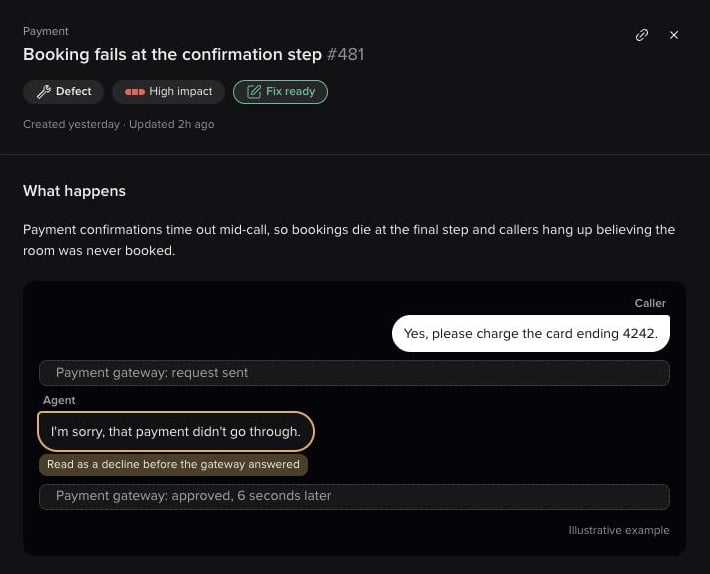
A single finding, with its evidence
- Approve and publish a fix Wren has drafted and verified
- View the changes before deciding
- Refine it in chat if the fix is close but not right
- Answer a question Wren has about your business rules, right in the finding, when it needs one to proceed
- Dismiss it as working as intended, already resolved, not worth addressing, or a mistake by Wren, with the reason feeding back into what gets surfaced next
- Revert a change after the fact if it doesn’t hold up
- Reopen a closed finding
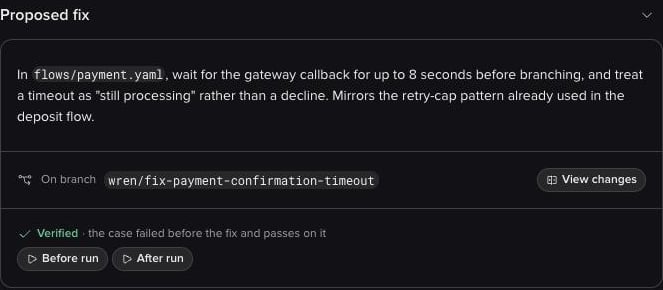
A drafted fix, verified against the test suite before you approve it
Related pages
Analyze conversations
Ask your own questions about real calls.
Conversation review
Read the calls behind a finding.
Simulation tests
Where verified fixes leave their test coverage.